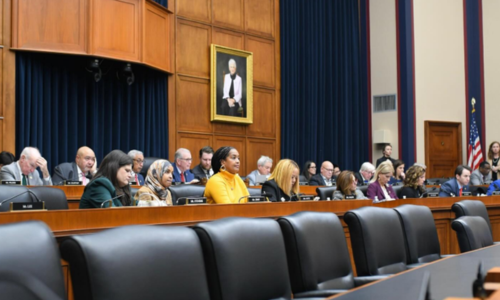
March 17, 2026 Update: H.R. 7891, H.R. 7892, and H.R. 7893 were all reported favorably out of Committee by votes of 33-0, 30-3, and 19-13, respectively.
On Tuesday, March 17, the US Committee on Education and the Workforce is marking up three pieces of legislation related to federal student aid. They include:
- The FAFSA Verification Efficiency Act – This bill would authorize the US Secretary of Education, in cooperation with the Commissioner of the Social Security Administration, to verify the Social Security number (SSN) and citizenship status of individuals required to provide that information for federal student aid purposes. Importantly, the bill would not change the FAFSA, or Free Application for Federal Student Aid, process for students from mixed-status families. Parents or spouses without SSNs, or whose identities are not verified through TransUnion, would still manually enter their tax information, as they do today. The bill would authorize the US Department of Education (ED) to verify the citizenship status of contributors who have SSNs, even though that verification is not required for students from mixed-status households to apply for federal student aid. The bill opens with the clause, "Notwithstanding any other provision of law," which grants ED unusually broad authority to verify FAFSA applicants' personal information. A statutory change is necessary because current law only permits the agency to verify the SSN and citizenship status of students, not contributors, such as parents. This bill would expand that authority. The National College Attainment Network (NCAN) would prefer the bill be narrower in scope, authorizing Federal Student Aid (FSA) to verify only the citizenship status of students and parents who apply for Parent PLUS loans. We will continue working with Education and Workforce Committee staff to ensure any statutory changes are limited to what is required for administering federal student aid programs.
- The No Aid for Ghost Students Act of 2026 – This bill would require ED to implement an identity fraud detection system to screen every FAFSA application submitted on or after October 1, 2026. If an application triggers reasonable suspicion of identity fraud, this bill requires ED to notify both the applicant and any colleges the student listed on their FAFSA. Those colleges would be then be prohibited from disbursing federal financial aid until they verify the student's identity through either an in-person meeting or a live video call. The US Secretary of Education would be required to establish guidelines for this verification process, report to Congress on the system's design by November 2026, and submit annual effectiveness evaluations beginning in October 2027. According to FSA, fraud detection has prevented $1 billion in Pell Grants from being disbursed already. The problem of fraud in federal student aid has grown as more online, asynchronous postsecondary programs have emerged. NCAN supports fraud detection efforts that preserve the integrity of the Pell Grant program.
- The Student Aid Fraud Oversight and Accountability Act of 2026 – This bill requires ED to identify postsecondary institutions that have disbursed federal student aid to students reasonably suspected of committing identity fraud, as determined by ED’s identity fraud detection system, exclusive of schools that have confirmed that the students did not commit identify fraud through in-person (live, or synchronous audiovisual) identity verification. ED may then use this information to inform program reviews, audits, investigations, and other oversight activities. This bill is likely to have a disproportionate impact on community college and other open access postsecondary institutions, which have been targeted for federal student aid fraud in the past.
“Income verification rates have fallen dramatically since IRS data has been imported directly to the FAFSA as a result of the bi-partisan FAFSA Simplification and FUTURE Acts. Federal Student Aid is now moving forward with identity fraud detection measures. Together, these changes should largely prevent fraudulent federal student aid from being disbursed and ensure that funding allocated to Pell goes to students from low-income families pursuing their postsecondary aspirations,” said Kim Cook, CEO of NCAN.