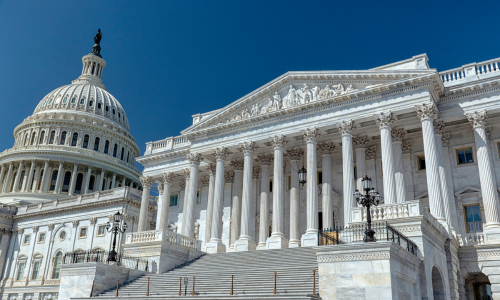
 As a first-generation college student and Pell Grant recipient, efforts to expand opportunities in higher education have shaped how I navigate college. Last week, I was able to attend the National College Attainment Network’s (NCAN’s) 2026 Leadership Summit in Washington, DC, to advocate for more support for the Pell Grant, so that other students like me have the support they need to succeed. At the Summit, I wasn’t just working behind the scenes – I was in a space where my own experiences were reflected in the stories, conversations, and priorities being elevated.
I spent the two days of the Summit in community with students, practitioners, and advocates all working toward a shared goal of ensuring students have the financial support to access and complete their postsecondary education. In sessions and conversations, I kept returning to one idea: students' stories ground policy conversations in lived experience. Stories contextualize data and make it harder to ignore the impact of the financial uncertainty students are navigating when Pell funding falls short.
At the same time, I was reminded of the barriers that continue to shape our experiences as first-generation students, including confusing financial aid award letters and a lack of clear information about what college will actually cost. These gaps in transparency don’t just create confusion; they can influence whether students enroll or continue their education.
Here are a few takeaways that I’m still thinking about:
Sustaining support for Pell Grants matters, now more than ever
The Summit highlighted the importance of maintaining strong, bipartisan support for the Pell Grant program.
The maximum Pell Grant award has remained at $7,395 since the last increase in 2022 (and the President’s recent budget proposal maintains it). It has not kept pace with inflation, and students are feeling the pressure of rising costs. Level-funding Pell is simply not enough and means students will continue to navigate financial gaps that affect our ability to stay enrolled and persist.
On the second day of the Summit, I was able to join over 250 NCAN members, including 50 students, as we collectively held over 125 meetings with Members of Congress and their staff. Across these conversations, there was a clear message for policymakers: maintaining and strengthening Pell Grant funding is critical to expanding postsecondary access. Students' stories are part of the policy conversation.
During the Summit, I had the opportunity to interview students about what the Pell Grant means in their daily lives. A recent NCAN analysis found that if the maximum award had kept pace with inflation, it would be $8,109 today. When I asked students what an additional $700 in Pell Grant support would mean to them, their answers were immediate and practical.
An extra $700 would make it easier to pay for textbooks, cover groceries, and afford transportation. It would also make rent less of a burden, enable students to reduce work hours, and enable a deeper focus on their studies. These responses underscored how even modest increases to the max Pell award can have a meaningful impact on college completion. Students made it clear that when we talk about funding levels, we are really talking about stability and the ability to persist.
Advocacy becomes more accessible through experience
For many students, including myself, visiting Capitol Hill for the first time can feel intimidating. However, the Summit created space for students to step into advocacy with confidence. In meetings with congressional staff from Massachusetts and New York, I watched my peers speak with clarity and confidence about their experiences and connect those personal stories to policy solutions. These conversations reflected a shared goal of advocating while educating. It was not about having the perfect words; it was clearly conveying how Pell Grants and cost transparency make access to higher education possible.
Attending the 2026 Leadership Summit made one thing clear: expanding college access and attainment requires bipartisan commitment and the voices of those most impacted. Connecting with other first-generation students and Pell Grant recipients reinforced that we are at the center of these conversations about access and opportunity in higher education.
Pell Grants are not just funding lines in a budget. For millions of students, they determine whether college is financially possible at all. When funding is held flat or reduced, the impact is immediate. It shows up in dropped courses, delayed graduations, and students being forced to step away from higher education entirely. These are not distant outcomes. They are lived realities that affect students nationwide.
I am grateful to have learned from and worked alongside NCAN members who are committed to ensuring that students who rely on Pell Grants are centered in decisions that shape our futures.