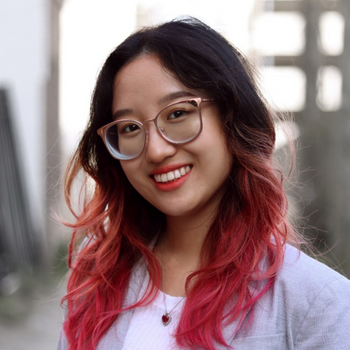
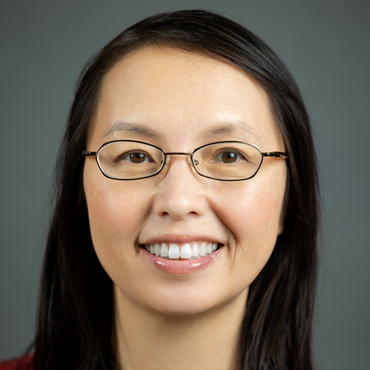
By Tong Lee, Senior Manager of Retention and Database, and Nhan La, Communications Intern
Reading time: Four minutes
This blog post is the first of a two-part series written in recognition of Asian American and Pacific Islander Heritage Month. Check out the second part here.
As Southeast Asian-born Americans, Asian American and Pacific Islander (AAPI) Heritage Month (celebrated annually in May) is a reminder for us to honor the generations of AAPIs who staked a path for us on our own journeys to this country, particularly
as postsecondary education became the gateway for us to find social and economic mobility.
Although I came to the United States when I was young, being a first-generation immigrant with parents who spoke no English, I had to figure out a lot of things by myself. Amongst these was college, especially since my parents never made it past high
school, so they could not help me. This was tough when I was a senior in high school feeling lost as to what steps I should be taking to apply and enter a university without anyone to guide me on the process. In conjunction with senioritis, plenty
of exams, and the uncertainty of what path I wanted to pursue in college, the college application process was overwhelming. Because of this, I was dissuaded from applying to a four-year institution, and I completed a two-year program at Northern Virginia
Community College (NOVA) instead to slowly figure out what steps I should be taking and exploring what I wanted to pursue.
Although I was initially a bit sad that I did not follow the traditional college route and graduate at the same time as my peers, it provided me with much-needed time to figure things out for myself. My time at NOVA allowed me to seek out resources on
my own time without the pressure of an imminent deadline. Furthermore, I had an advisor that was easily accessible to help facilitate my transfer process to a four-year institution. My experience at community college helped to prepare me for the steps
I would take later in my college career as well as kick-off my career. I ended up transferring to Virginia Commonwealth University in 2019, where I am now about to graduate from with a double major in Graphic Design and Creative Advertising.
Nhan and I are a couple of decades apart, but the challenges we faced preparing for post-secondary education as Southeast Asians first-generation college students were quite similar. My family also arrived in the United States with no English skills.
We left Laos due to the Vietnam and Secret Wars and faced challenges adapting to a new life in this country. As the 5th of 6th children, I was the first to have a chance
to attend a four-year institution.
The year was 1995. Like Nhan, I felt alone navigating the college application process. There is little disaggregated data on Southeast Asians and college attainment, but I grew up with an unspoken understanding that Hmong (the ethnic group I identify as) kids did not get a postsecondary education and if they did, it was not to an institution more than a commuting distance from home. The trend has not improved since then, when considering a
2020 report from the Southeast Asia Resource Action Center and Asian American Justice Center stated nearly 30% of Southeast
Asian Americans did not graduate from high school or obtain a GED, compared to the national average of 13%.
Fortunately, I was one of a handful of students from my high school selected to receive a scholarship from a college financial planning company to cover the cost of their services in assisting our cohort with the college application process. My advisors
counseled me on where to apply and stressed the value of completing the FAFSA. My financial aid award letter proved pivotal in helping me decide to attend Grinnell College.
Although I felt alone throughout the ordeal, my understanding of the college access field today through my work with the National College Attainment Network helped me see I was not alone. I tried searching for the company that assisted me nearly 30 years
ago but had no luck. In hindsight, it may have been the start of a burgeoning college access field that opens the doors to possibilities.
Interested in learning more about AAPI postsecondary education access and attainment? Check out these readings and resources:

 Email to a Friend