FAFSA Simplification Yielded 1.7 Million Additional Pell-Eligible Students
Wednesday, January 28, 2026
By Eddy Conroy, Senior Director, Communications
Reading time: Three minutes

Making it easier to apply for financial aid and simplifying the eligibility criteria results in more students qualifying for Pell Grants and other financial aid.
For more than a decade, the National College Attainment Network (NCAN) and its members have argued that a simpler and
easier financial aid process would mean more students applying for financial aid, more students qualifying for aid, and in the long run, that means more students believing that college is possible for them.
We won that argument.
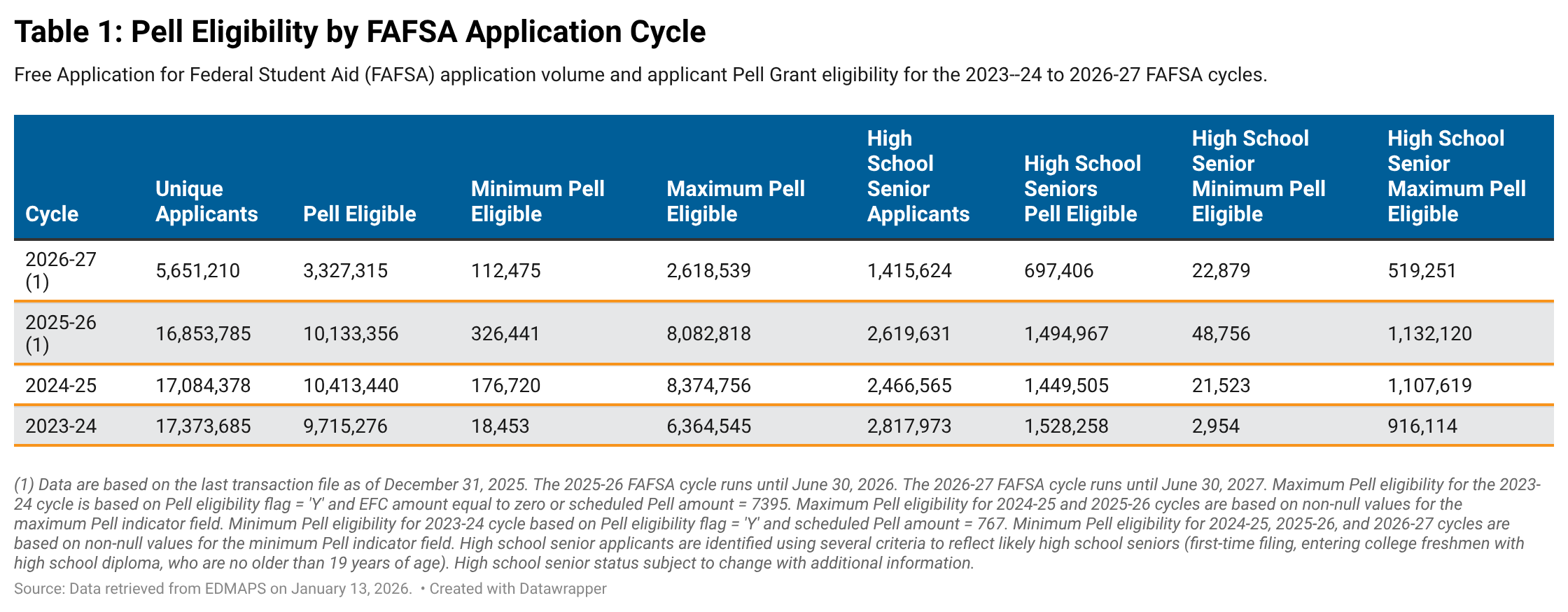
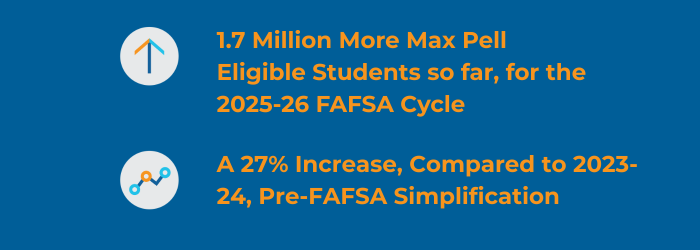
1.7 million more students were eligible for maximum Pell Grants in the 2025-26 Free Application for Federal Student Aid (FAFSA) cycle - a 27% jump compared to the 2023-24 pre-FAFSA simplification cycle (see table 1). The increase represents a 27% increase
in total students eligible for the maximum Pell Grant.
We are seeing consistent positive trends when it comes to FAFSA and Pell Grant eligibility, with increases in total applicant numbers, recent high school graduate numbers, and significant increases in the number of students eligible for maximum and minimum
Pell Grants.
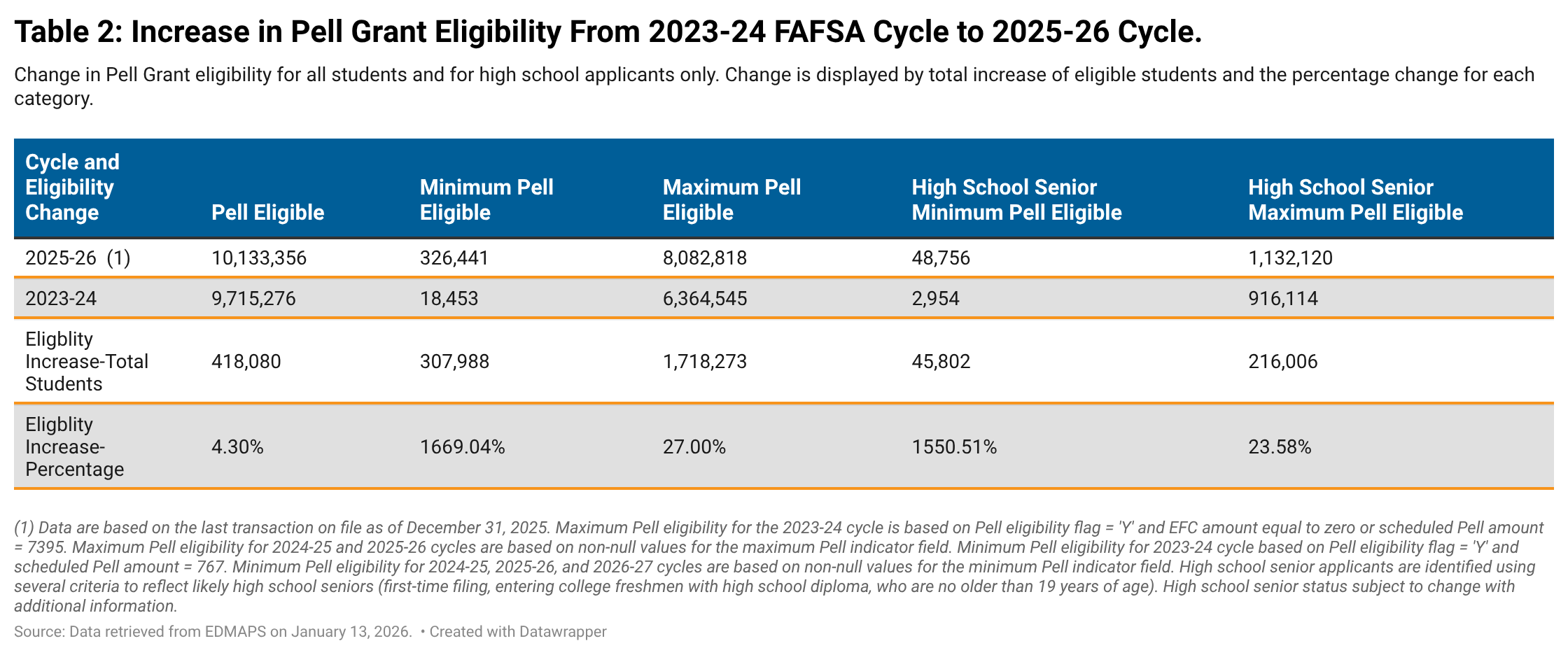
Recent high school graduates account for over 215,000 of the increase in max Pell eligible students, an almost 24% increase (see table 2). There is also still room for those numbers to grow, with five months left in the 2025-26 FAFSA cycle. There is also an enormous increase in the number and percentage of students eligible for minimum Pell grants (see Table 2). For high school applicants, there has been an over 1,500% increase in eligibility for minimum Pell. The large increase in students eligible for at least a small amount of support, combined with the increases in the number of students eligible for the maximum grant is an incredibly positive change.
The increase in students eligible for a maximum Pell Grant is at least partially the result of the changes to eligibility rules ushered in by the bi-partisan FAFSA Simplification Act that President Trump signed into law at the end of his first term. That
is based on NCAN’s analysis of data provided by the Office of Federal Student Aid.
“We are finally seeing the promise of a better and simpler FAFSA made real,” said NCAN CEO Kim Cook. “This year’s smoother process is helping to rebuild trust in the financial aid system with the students and families that NCAN member organizations serve
every day, ensuring that more students will gain access to the Pell Grants that help make postsecondary education more affordable.”
The good news for Pell Grant-eligible students comes as college enrollment is reaching all-time highs. Encouragingly, students who grew up in ZIP codes with the lowest median incomes are enrolling at a higher rate than other groups of students, based
on the National Student Clearinghouse’s fall enrollment report. These are exactly the students whose enrollment decisions can hinge on seeing their Pell Grant
eligibility.
“College remains one of the most powerful engines of economic mobility we have, and financial aid access makes that opportunity real for students and families,” said Aaron Lemon-Strauss, Executive Director, FAFSA Program at the US Department of Education.
“These results reflect not only improvements to the FAFSA experience, but also the extraordinary work of NCAN and college access professionals nationwide, who help students navigate the financial aid process to reach their higher education goals.
We’re grateful for that partnership and excited about the momentum we’re seeing.”
Moving forward, the increased Pell Grant eligibility needs to be combined with continued efforts to encourage high school students to apply to and enroll in college. Hopefully that task will be made a little easier when students see there is financial
support waiting for them if they apply and are accepted.
Making college seem financially attainable also means that the Pell Grant program needs continued support and funding.
Currently, the Pell Grant program is expected to receive level funding for the third year in a row, based on the fiscal year 2026 funding bills.
As NCAN’s Louisa Woodhouse notes in her analysis of the funding bills, “a third year of level funding at $7,395 effectively erodes the grant’s value for students.” Thankfully, tuition and fees have remained steady, and even decreased on a net basis
over the past few years. However, given the increases that students are facing for cost of attendance elements like housing and food, keeping the maximum Pell Grant flat is a cut in real terms.
Present concerns and our aspiration to increase future Pell Grant funding aside; the new data from FSA represents a real triumph for students and NCAN members alike. Our collective work means that millions more students are already benefiting from the
decade-plus long project of simplifying and expanding the Pell Grant. Updated 02.09.2026 to add Table 2 and additional context to the increases in Pell Grant Eligibility.
Read More:
|

 Email to a Friend